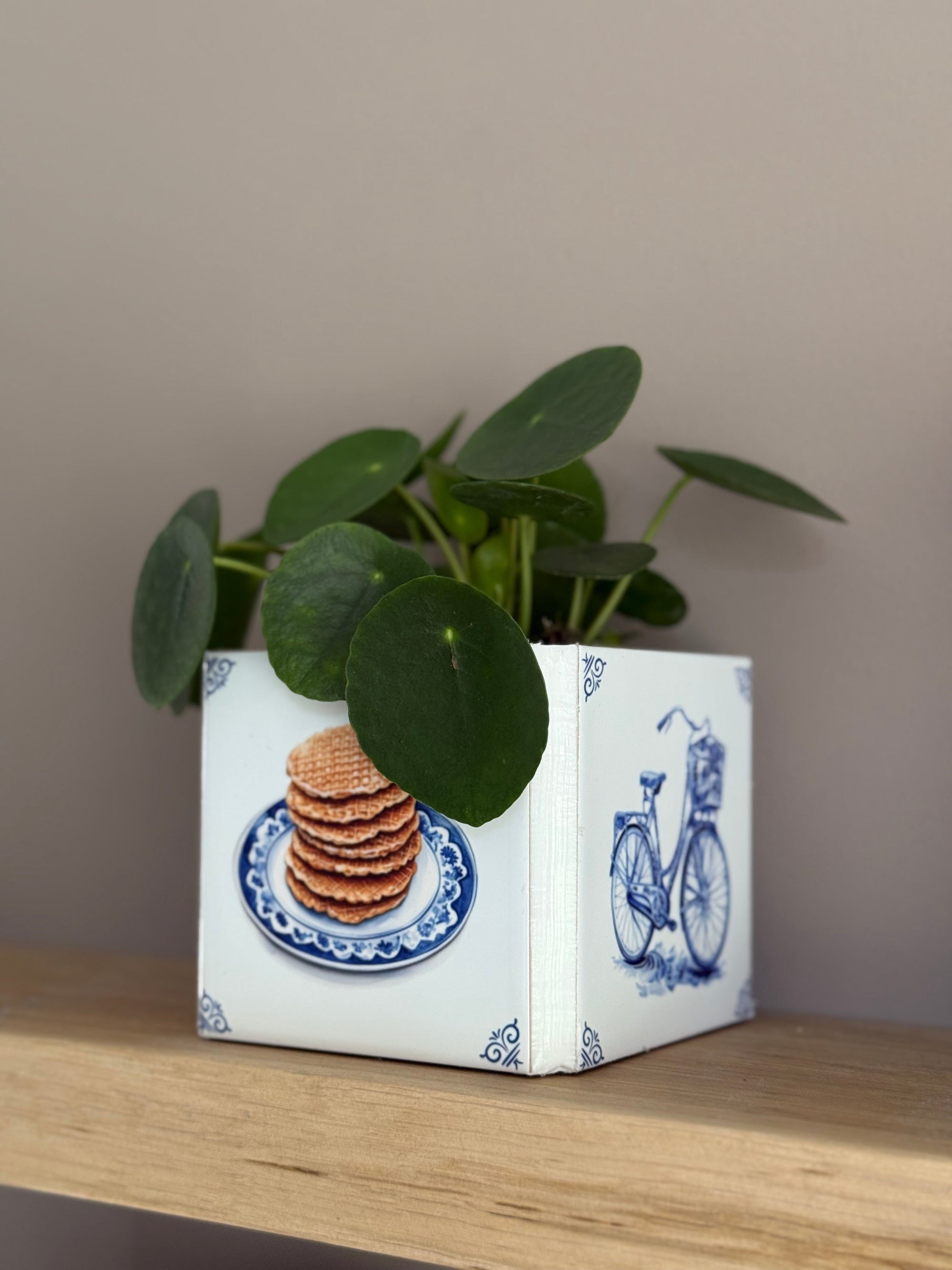

When buying modern Delft Blue tiles, the printing technique is the most important thing to check. Tiles made with UV printing carry water-based ink that sits on top of the tile and fades on contact with water. With sublimation, the design is baked into the ceramic itself using heat and pressure, so it cannot peel or fade. Beyond that, check the ceramic, the finish, the production method and the return policy. Here is the complete checklist.
First things first: antique or modern?
If you're looking to identify antique Delftware with maker's marks and appraisal value, that's a different category; an appraiser or the Royal Delft Museum can help. This guide is about modern design tiles in the Delft Blue style: new tiles with contemporary designs, as a gift or for your interior.
Check 1: the printing technique (this is the big one)
There are roughly four ways a design ends up on a tile, and you only see the difference after a few months:
Sublimation. The design is transferred into the ceramic surface using heat and pressure. It literally becomes part of the tile: it cannot peel, flake or fade from moisture. This is the technique we use, and the reason our tiles hang in bathrooms and as kitchen backsplashes.
UV printing. Many cheaper suppliers print the design on top of the tile with water-based ink. Looks fine in the box. But once the tile comes into contact with water or moisture, the image fades. For a tile, a product that belongs in kitchens and bathrooms, that's a serious problem.
Screen printing. Also a layer on top of the surface, more prone to fading and chipping than sublimation.
Hand-painted. The traditional method, beautiful craftsmanship with a price tag to match. Every piece is different, which adds charm but rules out photorealistic detail and consistent batches.
The simple test question for any supplier: "is the design in the tile or on it?"
Check 2: honesty about limitations
Distrust suppliers who claim their tiles can handle anything. Ceramic with a design is a decorative product, not a building material. To be honest ourselves: our tiles are fully water-resistant, but not fully scratch-resistant. If you install them in a tiled wall, use non-sanded grout to avoid scratches during installation, and avoid prolonged direct sunlight and abrasive cleaners. A supplier who simply tells you these things can be trusted on the rest too.
Check 3: made to order or mass production
Tiles off the shelf mean stock, and stock means the design range stays safe and generic. Made to order (what we do) means your tile is only produced after you order: no waste, always the newest designs, and personalisation is possible. Do allow a few days of production time; 3 to 5 business days with us.
Check 4: personalisation and range
Want your own photo, house or pet on a tile? Check how the personalisation works. With our Delftify tool you see an instant preview of your photo as a Delft Blue tile, before you order. No surprises afterwards.
Check 5: return policy and reviews
A 30-day return policy should be standard (personalised tiles excluded, which is fair). And check independent reviews, for example on Trustpilot, rather than only the quotes on the website itself.
The checklist in short
Ask about the printing technique (sublimation in the ceramic, not on it), test for honesty about limitations, choose made to order over mass stock, check how personalisation works and read independent reviews. Want to see how we do it? Browse all designs or read more about our quality.